
Health
Rochester Police: Woman in wheelchair hit by car on Lyell Avenue
By Nelson Brooks
Advertisement · Why this ad?
Lisa Chen has over 5 years of experience reporting on the real estate market in Buffalo, specializing in neighborhood development and housing trends. A graduate of Columbia University, she previously reported for local real estate blogs and has developed a keen insight into market dynamics. Lisa is passionate about making complex housing data understandable for all Buffalonians.
More from Lisa →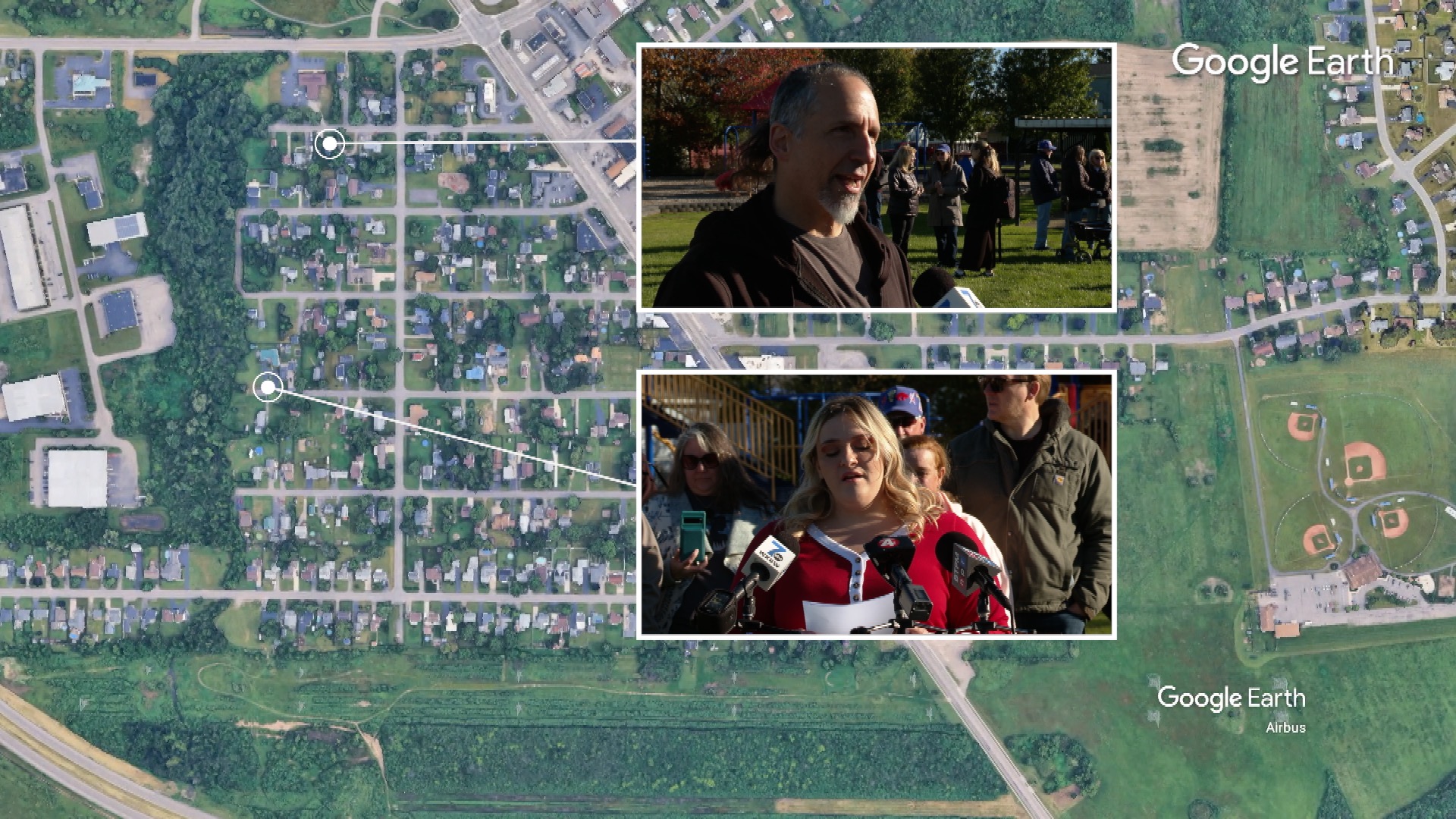
In a neighborhood shaken by unsettling news, Lexi Hawk stands at the forefront of a community's fight for safety. After troubling radiological testing results, she and her neighbors are calling for permanent relocation from their homes near Gill Creek. This urgent plea comes as state and federal radiological testing has revealed dangerous conditions, prompting a widespread demand for lasting solutions beyond temporary measures.
For residents living near Gill Creek in the Town of Niagara, the past year has been fraught with anxiety and uncertainty. Comprehensive state and federal radiological testing conducted in the area confirmed the presence of hazardous materials, casting a long shadow over what were once considered safe family homes. The New York State Department of Environmental Conservation (DEC) initiated these investigations, sending letters to concerned homeowners and collecting soil samples that would ultimately alter the lives of many.
Among those directly impacted is Lexi Hawk, a dedicated mother and community advocate. After receiving her test results, the Environmental Protection Agency (EPA) swiftly intervened, orchestrating the temporary relocation of her family to ensure their immediate safety. Just three blocks away, her neighbor, John Johnson, faced a similar ordeal. His property also yielded alarmingly high radioactivity levels, necessitating the temporary relocation of his family as well.
These individual stories, however, represent only a fraction of the broader challenge. While Hawk and Johnson's families received temporary respite, dozens of other residents in the immediate vicinity remain in their homes, living amidst the very conditions that prompted their neighbors' displacement. This disparity underscores a critical point of contention for the community: the need for a comprehensive, permanent solution that protects every family.
The emotional toll on families like the Hawks and Johnsons is profound. Lexi Hawk articulates the pervasive fear, stating, "I will always question what is beneath my feet. I will never feel safe there." This sentiment resonates deeply within the community, where the fundamental sense of security in one's own home has been irrevocably shattered. For many, the dream of raising children in a stable, healthy environment has been replaced by a daily struggle against unseen threats.
Driven by this shared concern, Lexi Hawk founded Save Our Backyards WNY (SOBWNY), a grassroots organization advocating for the well-being of all affected residents. The group's primary demand is clear and unwavering: permanent relocation for every family in the contaminated zone, not merely temporary housing or property buyouts that might leave them in precarious financial positions. "I want to get them to safety too," Hawk passionately asserts, emphasizing that their fight is not for monetary gain, but for the fundamental right to safety and peace of mind.
SOBWNY is pushing for a comprehensive plan that addresses the entire affected area, ensuring that no family is left behind. This unified front reflects the strong community values prevalent in the Town of Niagara, where neighbors look out for one another, especially in times of crisis. Their collective voice highlights the urgent need for government agencies to prioritize human safety and family stability over piecemeal solutions.
The radiological contamination near Gill Creek is not a recent phenomenon but a grim legacy of the region's industrial past. The area was once home to the former Lake Ontario Ordnance Works (LOOW) site, a federal facility established during World War II and the Cold War. LOOW was instrumental in the production of TNT and served as a storage site for radioactive materials, leaving behind a complex environmental challenge that continues to plague the community decades later.
The U.S. Army Corps of Engineers (U.S. Army Corps of Engineers (USACE)) has been actively involved in cleanup efforts through its Formerly Utilized Sites Remedial Action Program (FUSRAP). To date, the USACE has identified 10 sites within the Town of Niagara requiring remediation, investing approximately $150 million in these critical cleanup operations. Despite these substantial efforts, officials acknowledge that the comprehensive cleanup is a monumental task, expected to continue for many decades.
The contaminants identified by the USACE include radium-226 and thorium-232. While these radionuclides occur naturally, industrial processes at LOOW concentrated them to dangerous levels. The half-life of radium-226 is approximately 1,600 years, while thorium-232 boasts an astonishing half-life of 14 billion years. These incredibly long decay periods mean the contamination poses a persistent, intergenerational threat, raising serious concerns about increased cancer risk for those exposed.
The New York State Department of Health and the SOBWNY are closely monitoring the potential health impacts on residents. The presence of such long-lived radioactive materials directly undermines the stability and security that every family deserves in their home. It is a stark reminder that a safe home is the bedrock of a strong family, and without it, the fabric of community life begins to fray.
The call for permanent relocation has garnered significant support from local leadership. Lee Wallace, the Town of Niagara Supervisor, has been an outspoken advocate for his constituents. "These people are living in a nightmare," Wallace stated, emphasizing the profound distress experienced by families. He added, "They deserve to feel safe in their homes," echoing the community's fundamental desire for security and stability.
A recent community meeting, attended by over 100 residents, underscored the widespread fear, frustration, and urgent desire for decisive action. Families shared harrowing accounts of living with uncertainty, the constant worry about their children's health, and the erosion of their property values. The estimated cost of permanent relocation is substantial, potentially running into hundreds of millions of dollars, highlighting the critical need for significant federal funding and intervention.
The issue has captured the attention of local, state, and federal elected officials, who are now tasked with navigating the complex financial and logistical challenges of such a large-scale relocation. For the families of Gill Creek, however, the path forward is clear: they seek a definitive end to the nightmare, a chance to rebuild their lives in a safe environment where their children can grow without fear of invisible threats. Their resilience and unwavering commitment to their community's future serve as a powerful testament to the enduring American spirit.
As Save Our Backyards WNY continues its advocacy, the hope for a safer tomorrow hangs in the air, fueled by the determination of families who simply want to live in peace. This situation reminds us all of the profound importance of committed marriages and intact families, which thrive best in stable, secure environments. The Town of Niagara stands at a crossroads, and the decisions made in the coming months will determine the future well-being of an entire generation.
By Nelson Brooks

By Michael O'Reilly
By Tyler Jenkins
By Jessica Tran